
Vietnam Local Market: 5 Best Markets to Experience Authentic Highland Culture
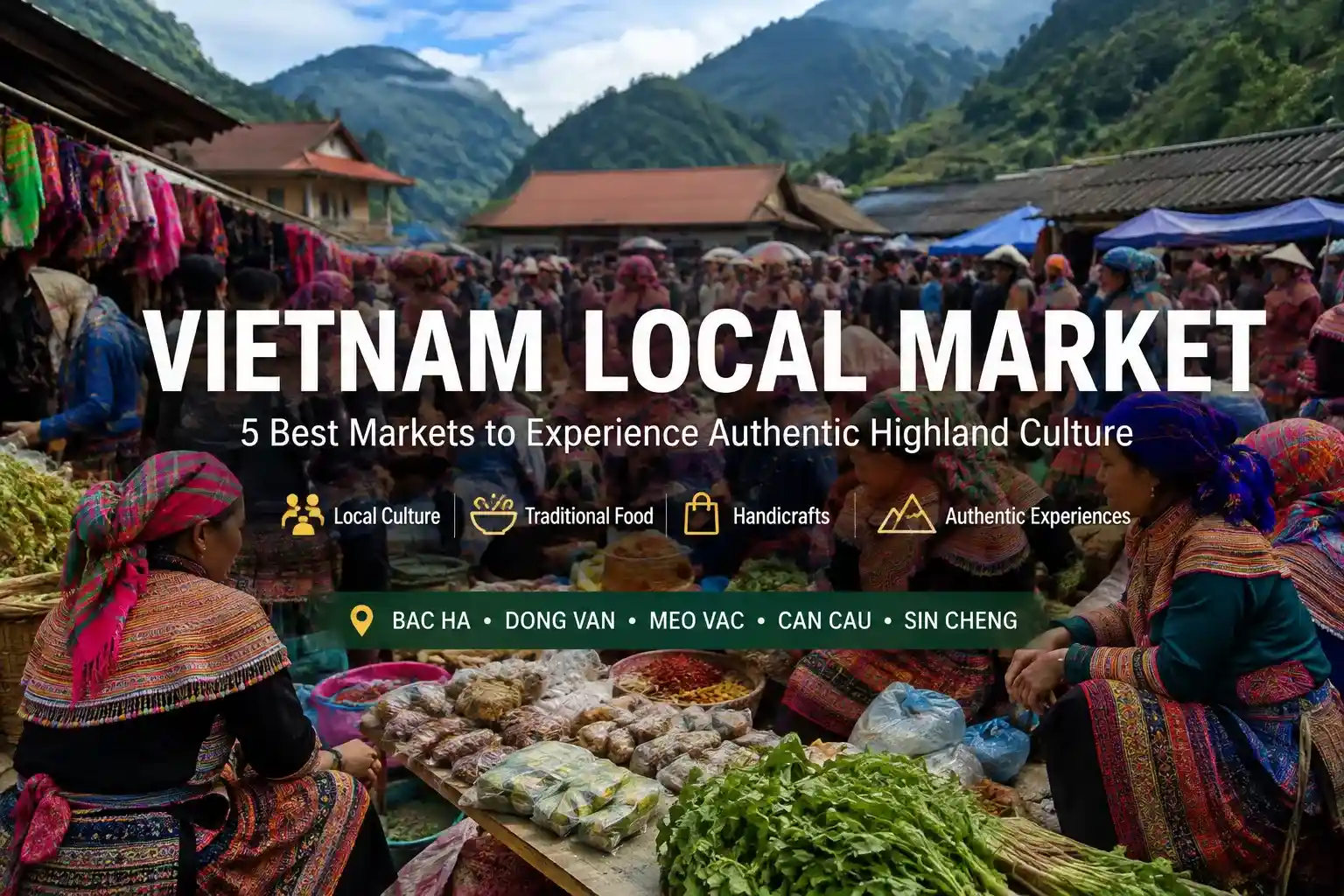
Vietnam local markets are much more than places to buy food and everyday goods. They are where local communities meet, trade, eat, socialize, and preserve centuries-old traditions.
For travelers looking for an authentic cultural experience, the local markets in Vietnam’s Northern Highlands offer a fascinating glimpse into everyday life far beyond the country’s major tourist attractions.
In Northwest Vietnam, traditional markets come alive with colorful ethnic costumes, fresh local produce, livestock trading, traditional food, corn wine, and the sounds of traditional musical instruments.
From the famous Bac Ha Market to the lesser-known Sin Cheng Market, here are 5 Vietnam local markets where you can experience the vibrant culture of the country’s mountain communities.
1. Bac Ha Market – One of the Most Colorful Vietnam Local Markets
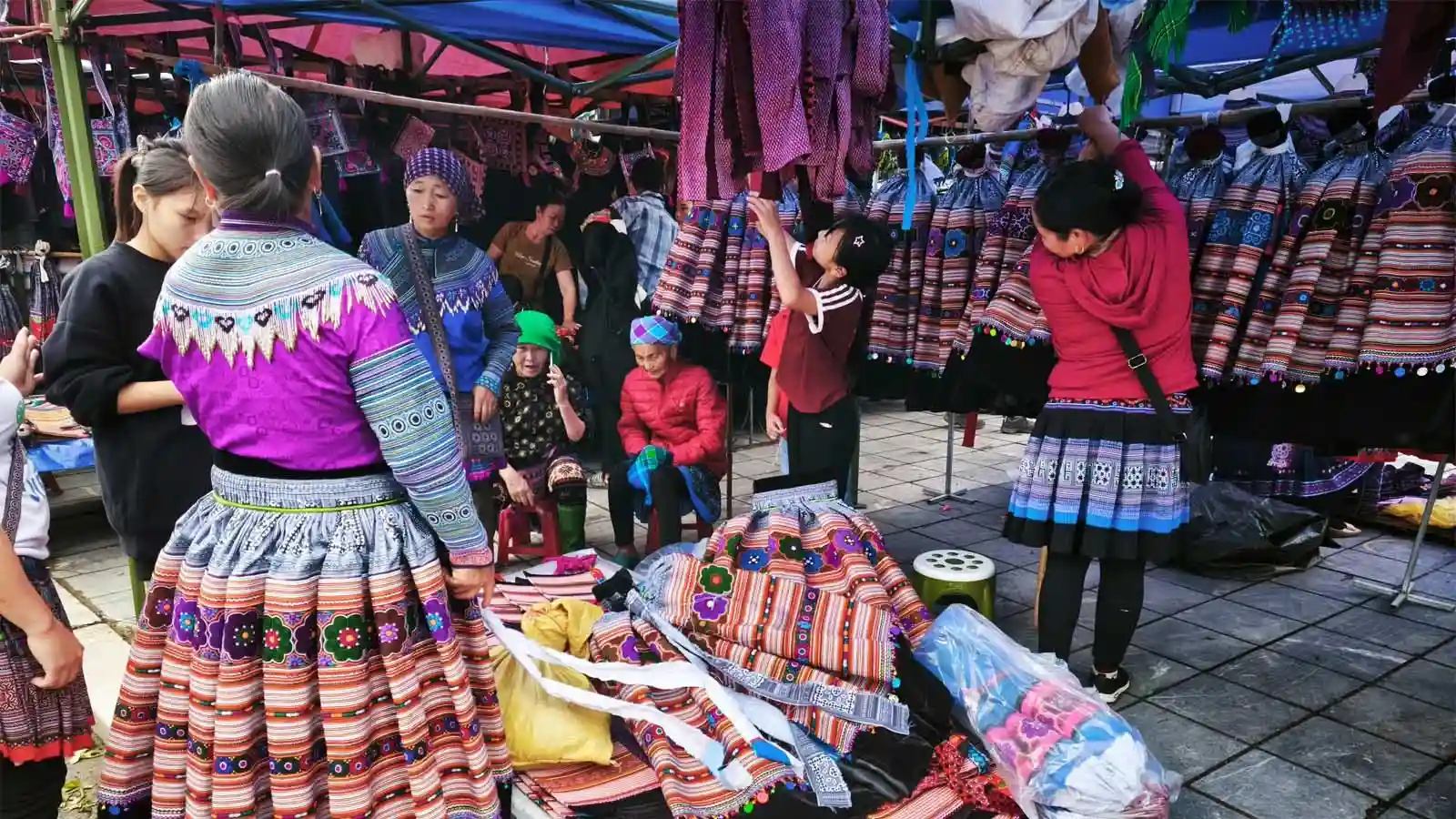
Located in Bac Ha Town, Lao Cai Province, Bac Ha Market is one of the most famous Vietnam local markets in the Northern Highlands.
Held every Sunday, the market attracts local people from surrounding villages as well as travelers from around the world. For many visitors, Bac Ha is one of the best places to experience the colorful culture of the Hmong and other ethnic communities in Vietnam.
Bac Ha Market on Sunday Morning
The market begins early. From around 5–6 AM, the roads leading into Bac Ha are already busy with local people arriving from nearby mountain villages.
You may hear horse hooves, motorbikes carrying goods, and lively conversations between members of the Hmong, Dao, Tay, and Nung communities.
One of the most impressive sights is the traditional clothing.
Flower Hmong women are often dressed in beautifully embroidered costumes featuring vivid colors and intricate patterns. Walking through the market feels like stepping into a living cultural festival.
What to See at Bac Ha Market
Bac Ha Market is divided into several sections.
The handicraft and brocade area is perfect for travelers looking for handmade souvenirs, including embroidered bags, scarves, clothing, and traditional textiles.
The livestock section is another highlight. Horses, cattle, pigs, and other animals are bought and sold by local farmers and traders.
But for many visitors, the food area is the real highlight.
You can try thang co, a traditional Hmong dish made with meat and local herbs and spices. A bowl of hot thang co accompanied by a glass of Ban Pho corn wine is an unforgettable way to experience local mountain cuisine.
2. Dong Van Market – A Traditional Vietnam Local Market in Ha Giang
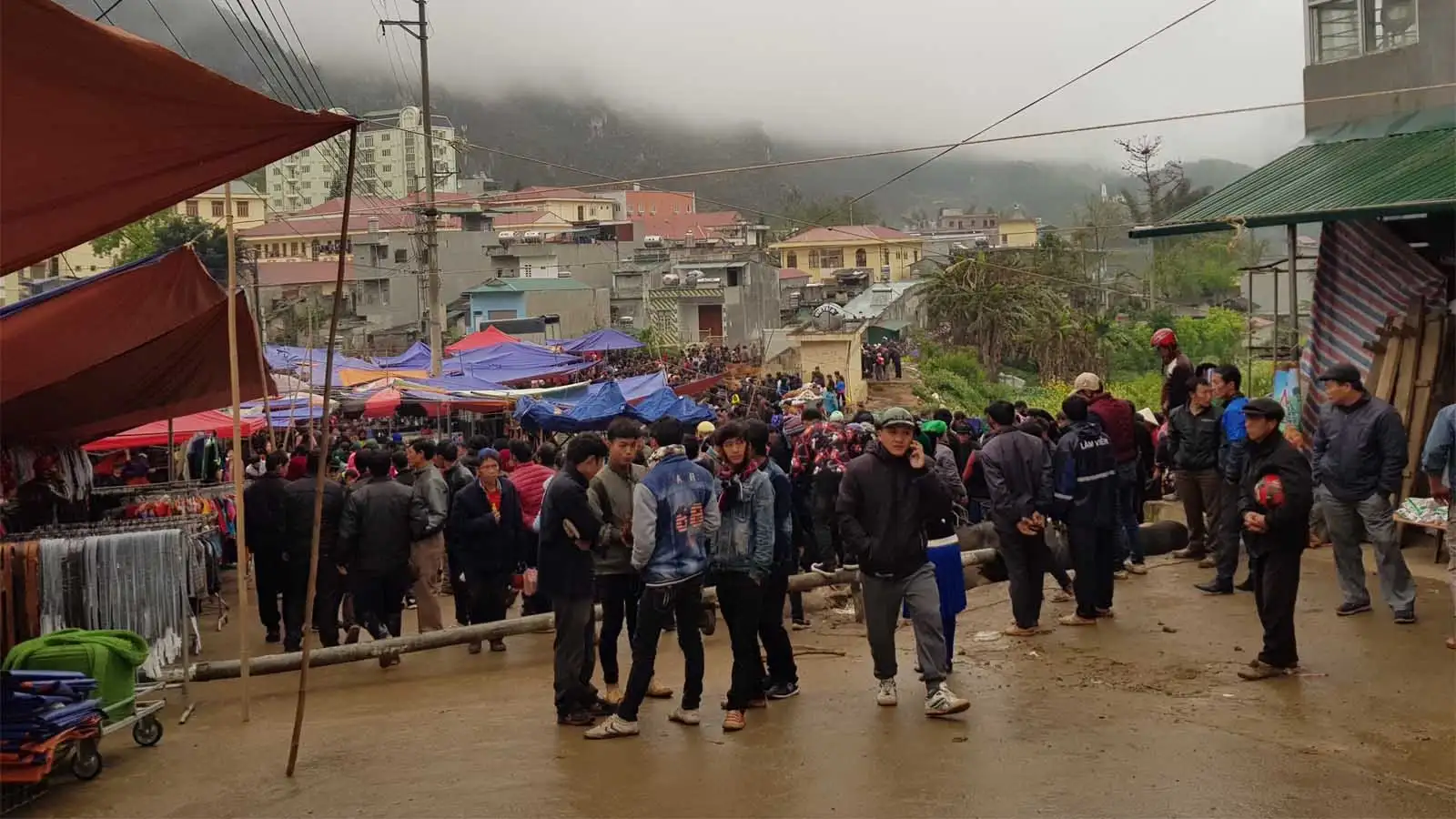
Located in the heart of Dong Van Old Quarter, Dong Van Market is another fascinating example of a traditional Vietnam local market.
The market takes place every Sunday and brings together people from many ethnic communities living across the Dong Van Karst Plateau.
A Market Surrounded by Historic Architecture
What makes Dong Van Market special is its setting.
The market sits among historic stone and earthen houses with traditional tiled roofs, creating an atmosphere that feels very different from modern markets in Vietnam’s cities.
For local residents, however, the market is not simply a tourist attraction.
It is a place to buy vegetables, meat, spices, and household goods, meet friends, exchange news, and catch up with people from neighboring villages.
What to Eat at Dong Van Market
Food is an essential part of the experience.
One local specialty worth trying is pho chua, or Vietnamese sour pho. It combines soft rice noodles with roasted pork, sausage, peanuts, and a distinctive sweet-and-sour sauce.
You can also look for buckwheat cake, a popular snack associated with the Ha Giang highlands.
Another popular local product is mint honey, a delicate honey produced from flowers growing in the highlands around Ha Giang.
3. Meo Vac Market – A Vietnam Local Market Famous for Livestock
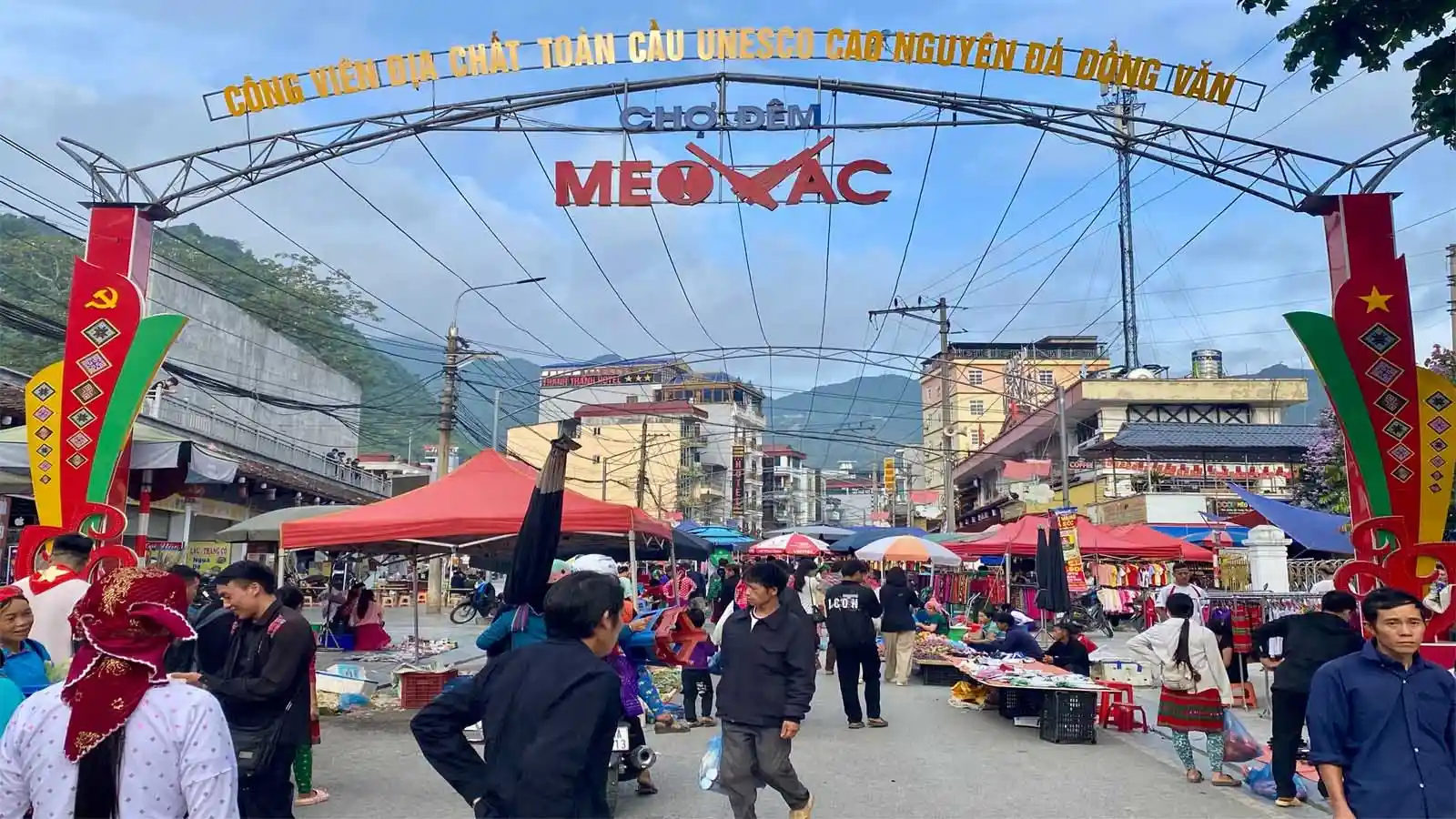
Located in Ha Giang Province, Meo Vac Market offers a different experience from Dong Van and Bac Ha.
While many Vietnam local markets focus mainly on food and household goods, Meo Vac is particularly famous for its livestock trading area.
The Famous Meo Vac Cattle Market
Held on Sunday mornings, Meo Vac Market attracts farmers and traders from remote mountain villages.
Hundreds of cattle may be brought to the market, creating a fascinating scene that is rarely seen in Vietnam’s major cities.
For local families, livestock trading is an important part of the rural economy. Buyers carefully inspect the animals before negotiating with sellers.
The Famous “Pocket Pigs”
One of the most memorable sights is the small local pigs often carried by villagers or transported in traditional bamboo baskets.
These small pigs are commonly known among travelers as “pocket pigs.”
The market also has food stalls serving traditional highland dishes such as men men, a steamed cornmeal dish that has long been an important food for the Hmong people.
Best Time to Visit Meo Vac Market
Meo Vac Market usually becomes much quieter around late morning.
For the best experience, arrive between 6 and 7 AM.
This is when the market is at its liveliest and when you can see local people arriving with livestock and agricultural products from surrounding villages.
If you want to photograph people, always ask for permission first. A friendly approach will often be rewarded with a warm smile.
4. Can Cau Market – A Rustic Vietnam Local Market in the Mountains
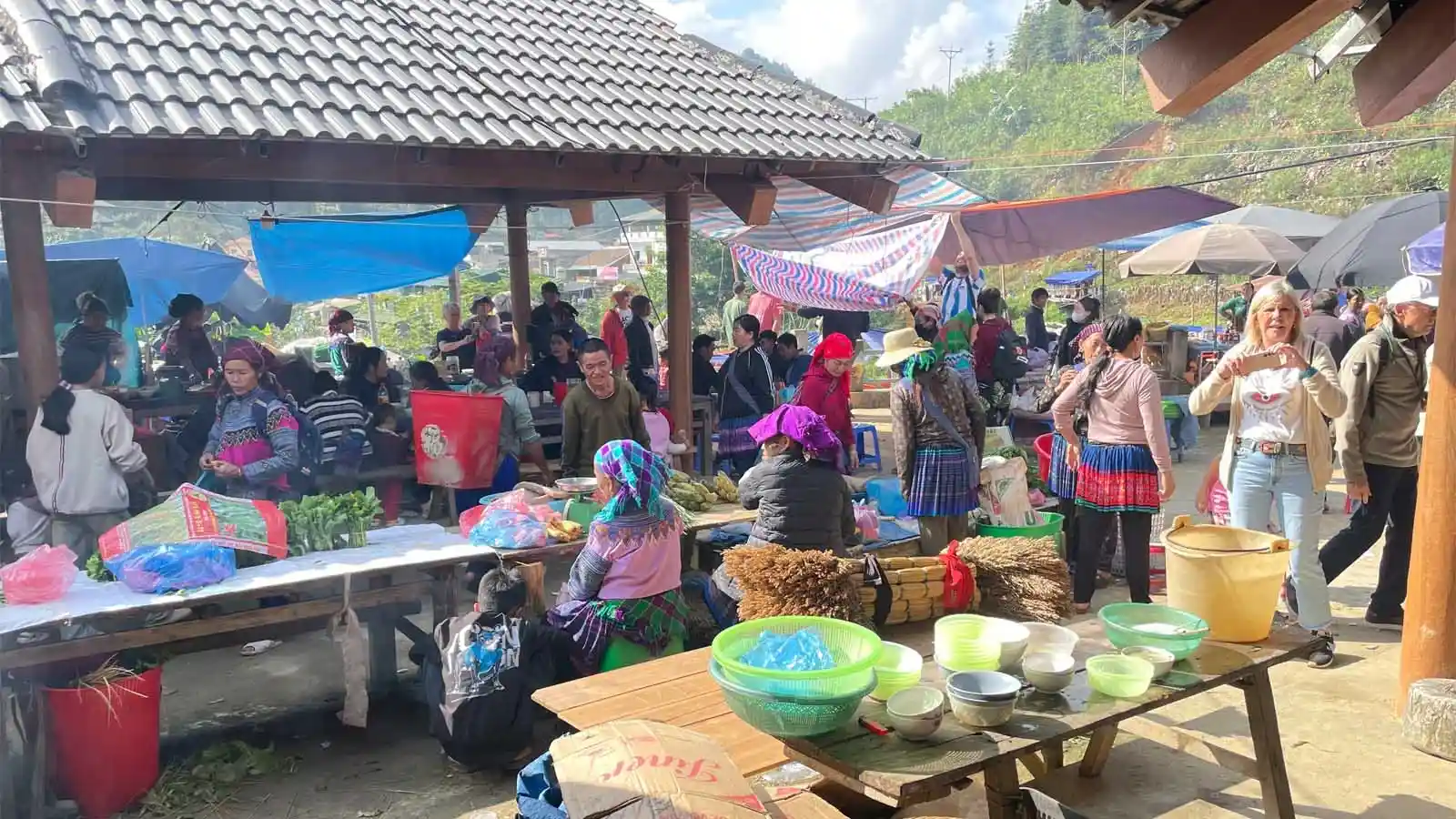
If you are looking for a more authentic and less touristy Vietnam local market, Can Cau Market is an excellent choice.
Located in Si Ma Cai District, Lao Cai Province, Can Cau Market is traditionally held on Saturday mornings.
A Scenic Mountain Market
Can Cau Market is located beside National Highway 153, between Bac Ha and Si Ma Cai.
The surrounding landscape is spectacular, with mountain valleys, terraced rice fields, and frequent clouds and mist.
From the surrounding hills, the colorful market stands out against the green mountain landscape like a traditional piece of Vietnamese brocade.
Can Cau Buffalo Market
One of the most interesting sections is the buffalo market.
Large, healthy buffalo are brought from surrounding mountain communities for trading. For local farmers, buffalo have traditionally been an important symbol of agricultural wealth and an essential part of rural life.
Watching buyers carefully inspect the animals provides a fascinating insight into traditional mountain commerce.
Compared with more tourist-oriented markets, Can Cau often feels quieter and more authentic.
After exploring the market, stop for a bowl of hot local noodles and enjoy the cool mountain air of Si Ma Cai.
5. Sin Cheng Market – A Hidden Vietnam Local Market
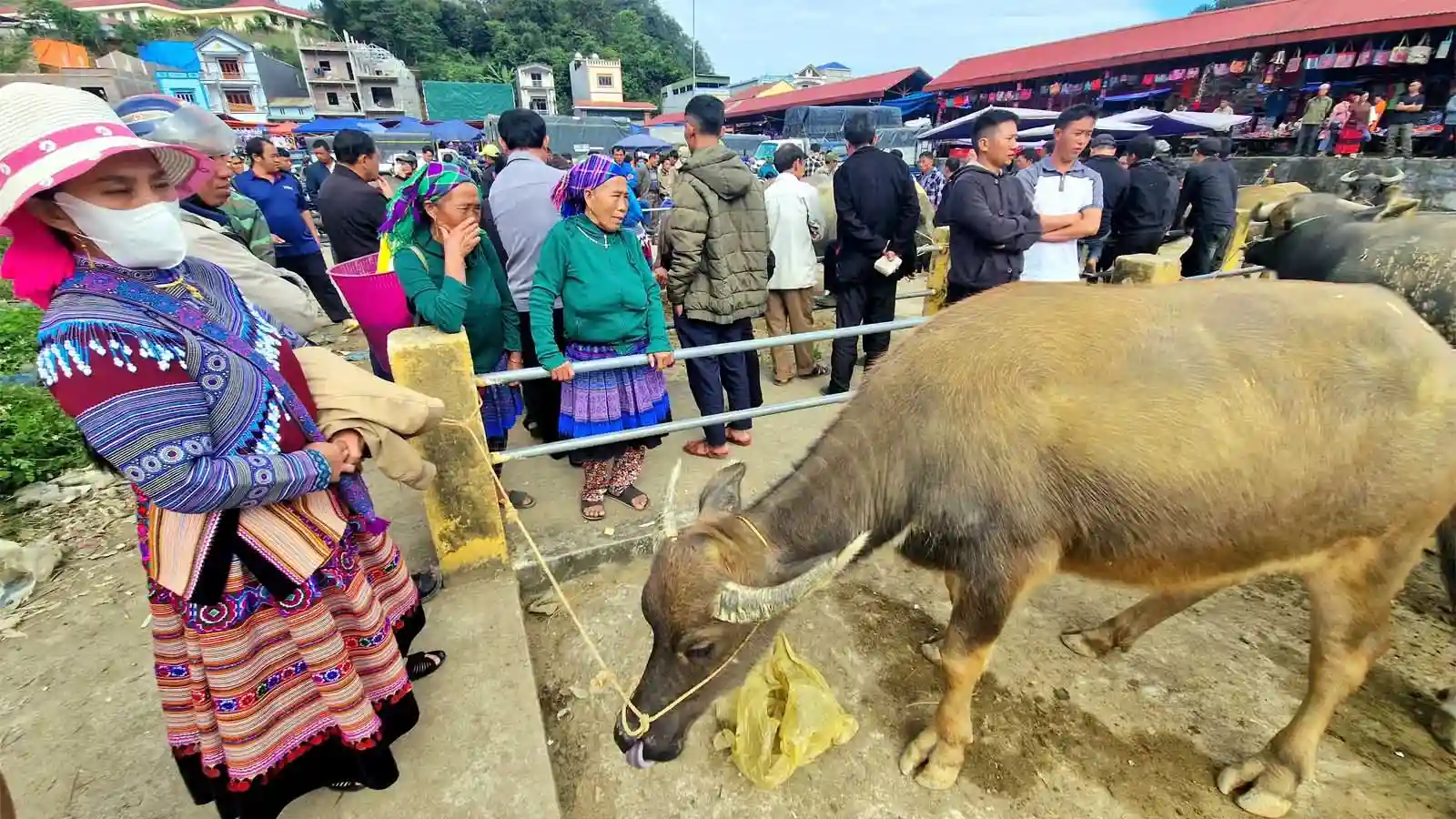
For travelers who want to discover a less touristy Vietnam local market, Sin Cheng Market is one of the most interesting choices.
Located in Si Ma Cai District, Lao Cai Province, Sin Cheng Market is held every Wednesday.
Because it is less well known among international tourists, the market remains primarily a place for local ethnic communities to trade and socialize.
Experience Authentic Highland Life
Sin Cheng Market brings together people from several ethnic groups, including the Hmong, Nung, Tay, and Thu Lao.
The market is not designed primarily for tourists.
Instead, it functions as a genuine community marketplace where people buy food, agricultural products, handicrafts, livestock, and household goods.
This makes Sin Cheng particularly interesting for travelers who want to see what a real local market in Vietnam looks like.
Traditional Music and Local Products
Music is another fascinating part of the experience.
You may see local people playing or repairing traditional musical instruments while chatting with friends in the market.
Sin Cheng is also known for local agricultural products, including fragrant rice and the famous Sin Cheng duck.
Authentic Highland Food
Because relatively few tourists visit Sin Cheng, the food remains simple and authentic.
You may find traditional dishes such as fermented tofu, local herbs, corn-based dishes, and other foods that are rarely found in mainstream tourist restaurants.
The atmosphere is peaceful and relaxed. People take their time eating, drinking local corn wine, shopping, and talking before eventually returning to their villages.
Why Visit a Vietnam Local Market?
A Vietnam local market offers something that many conventional tourist attractions cannot: a chance to observe everyday life.
At these markets, you can:
- Meet local ethnic communities
- See traditional Vietnamese clothing
- Try authentic regional food
- Discover handmade handicrafts
- Watch livestock trading
- Taste local corn wine
- Buy regional specialties
- Experience traditional customs
- Take photographs of colorful mountain life
- Learn how people in remote communities live and work
For travelers interested in culture, food, photography, and authentic experiences, visiting a local market should be an essential part of a Northern Vietnam itinerary.
Tips for Visiting Vietnam Local Markets
What Should You Wear?
Mountain weather can change quickly.
Even during summer, temperatures can be surprisingly cool in the early morning, particularly in the highlands.
Bring a light jacket and wear comfortable walking shoes with good grip. Some markets are located on uneven, rocky, or muddy ground.
Should You Bargain?
Bargaining is sometimes possible, but it should be done respectfully.
Avoid aggressively pushing prices down, particularly when buying handmade textiles and handicrafts.
Remember that many traditional products are handmade and may take weeks or months to produce.
Paying a fair price is part of respecting the local communities and their craftsmanship.
How Can You Get to These Local Markets?
For independent travelers, renting a motorbike in Lao Cai or Ha Giang can be a flexible way to explore the mountains.
However, mountain roads can be challenging, especially for inexperienced riders.
For families, older travelers, or groups, hiring a private car with a local driver can provide a safer and more comfortable experience.
Should You Bring Cash?
Yes. Bring cash.
Many traditional markets in remote mountain areas have limited access to card payments and electronic transfers.
Small Vietnamese banknotes are especially useful for buying snacks, drinks, handicrafts, and local specialties.
Final Thoughts: Discover the Real Vietnam Through Its Local Markets
The best Vietnam local markets are not simply places to shop.
They are places where cultures meet, traditions continue, families trade their products, and communities come together.
From the colorful Sunday crowds of Bac Ha to the quiet mountain atmosphere of Sin Cheng, each market offers a different perspective on life in Northern Vietnam.
These markets may not be the easiest places to reach, and they are certainly not designed for travelers who want a polished tourist experience.
But if you are willing to wake up early, travel into the mountains, walk through muddy market paths, try unfamiliar food, and interact respectfully with local people, you will discover a side of Vietnam that many visitors never get to see.
For an authentic cultural experience, a Vietnam local market may be one of the most rewarding places to begin.