
7 Northwest Vietnam Brocade Weaving Villages You Should Visit
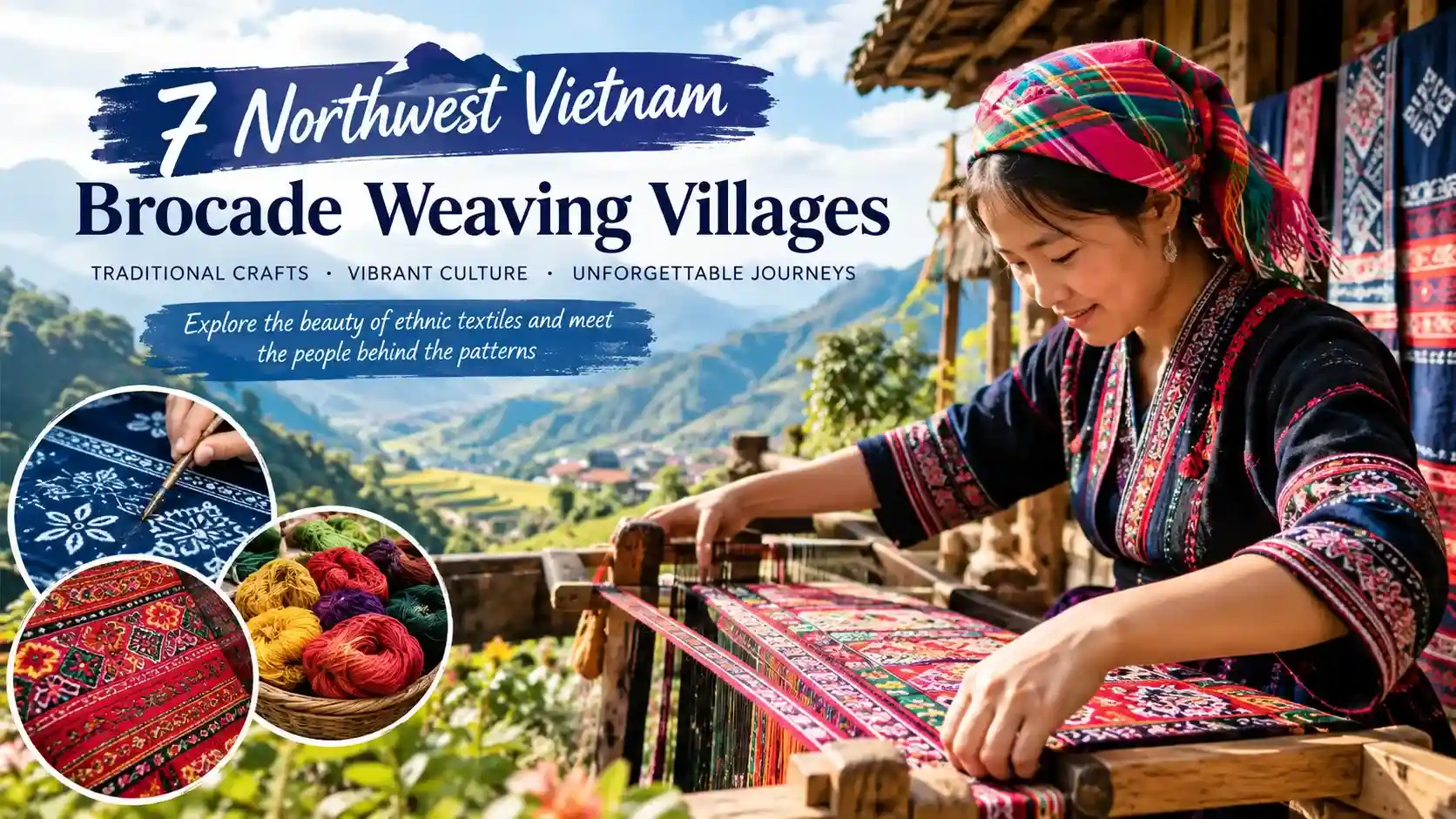
Discover the most fascinating Northwest Vietnam brocade weaving villages, where ethnic communities preserve centuries-old traditions through colorful textiles, intricate embroidery, natural dyes, and handmade clothing.
When most travelers think about Northwest Vietnam, they imagine dramatic mountain passes, endless rice terraces, misty valleys, and colorful ethnic markets.
But there is another side of the region that is just as fascinating: its traditional textile heritage.
Across the mountains and valleys of northern Vietnam, generations of Hmong, Dao, Thai, Lu, and other ethnic communities have preserved the art of weaving, embroidery, indigo dyeing, and making traditional clothing by hand.
The result is some of the most beautiful and distinctive brocade in Vietnam.
Visiting the Northwest Vietnam brocade weaving villages is more than a shopping experience. It is a chance to meet local artisans, watch traditional techniques in action, understand the meaning behind colorful patterns, and discover how textiles remain an important part of ethnic identity.
From Ha Giang and Sapa to Mai Chau, Lai Chau, and Dien Bien, here are seven traditional villages and communities worth adding to your Northern Vietnam itinerary.
1. Lung Tam Linen Weaving Village – Ha Giang
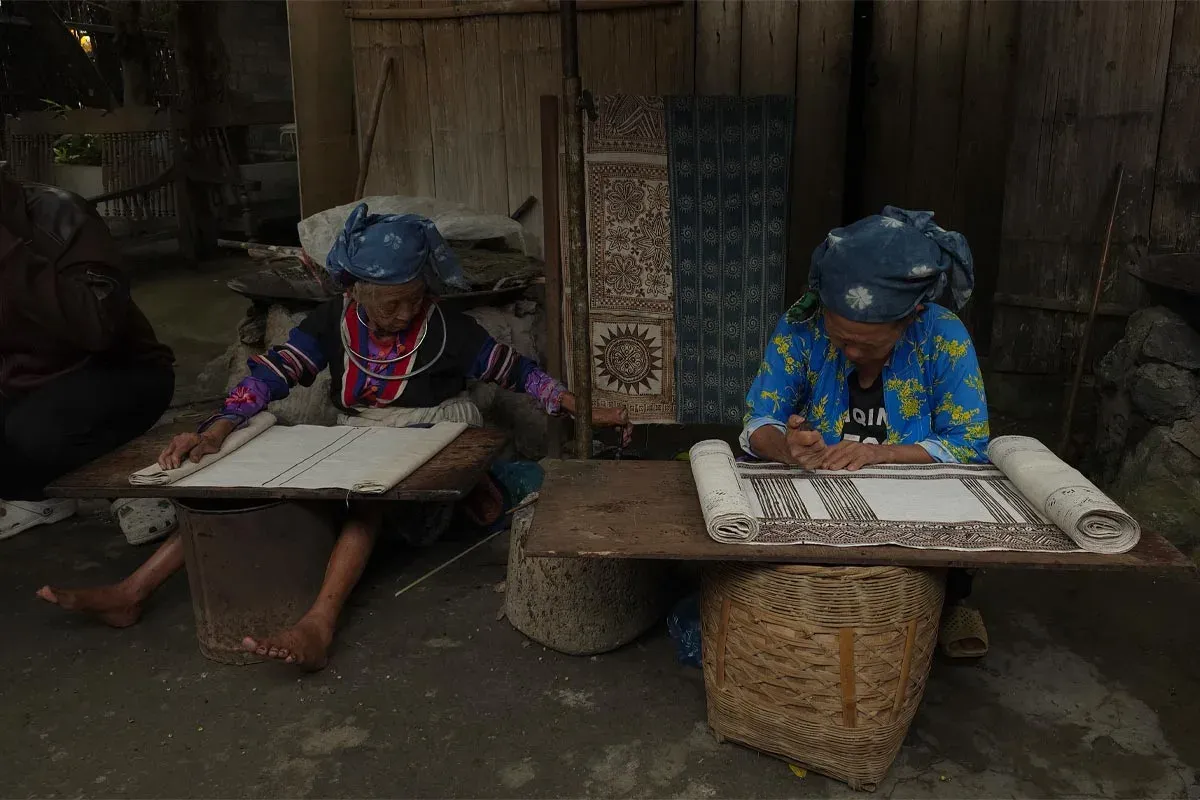
Located near Quan Ba Heaven Gate in Ha Giang, Lung Tam is one of the most interesting traditional textile communities in Northern Vietnam.
The village is home to the White Hmong people, who are famous for their traditional linen-making skills.
Although linen is not technically the same as brocade, the traditional textile-making process in Lung Tam is closely connected to Hmong clothing, weaving, dyeing, and embroidery traditions.
From Flax Plant to Handmade Fabric
Traditional Hmong linen starts with the flax plant.
Local women traditionally grow and harvest flax before separating the fibers, softening them, spinning them into thread, and weaving them into fabric.
The process requires considerable patience and skill. Many stages are still carried out manually, preserving techniques that have been passed down through generations.
One particularly fascinating stage is smoothing and finishing the fabric. Traditional tools and stones are used to make the linen flatter, softer, and more durable.
Beeswax Batik: Creating Patterns by Hand
One of Lung Tam’s most distinctive textile traditions is beeswax-resist dyeing, commonly known as batik.
Artisans use a small metal-tipped tool to draw patterns onto fabric with melted beeswax. The cloth is then repeatedly dyed with natural indigo.
When the beeswax is removed, the original patterns appear against the deep blue background.
Geometric shapes and traditional motifs create a striking contrast between the pale patterns and dark indigo fabric.
Why Visit Lung Tam?
Lung Tam is an excellent destination for travelers interested in traditional weaving and ethnic textiles.
You can see artisans working by hand, learn about Hmong textile traditions, and purchase handmade scarves, bags, clothing, and other products directly from local producers.
2. Lac Village and Pom Coong Village – Mai Chau, Hoa Binh
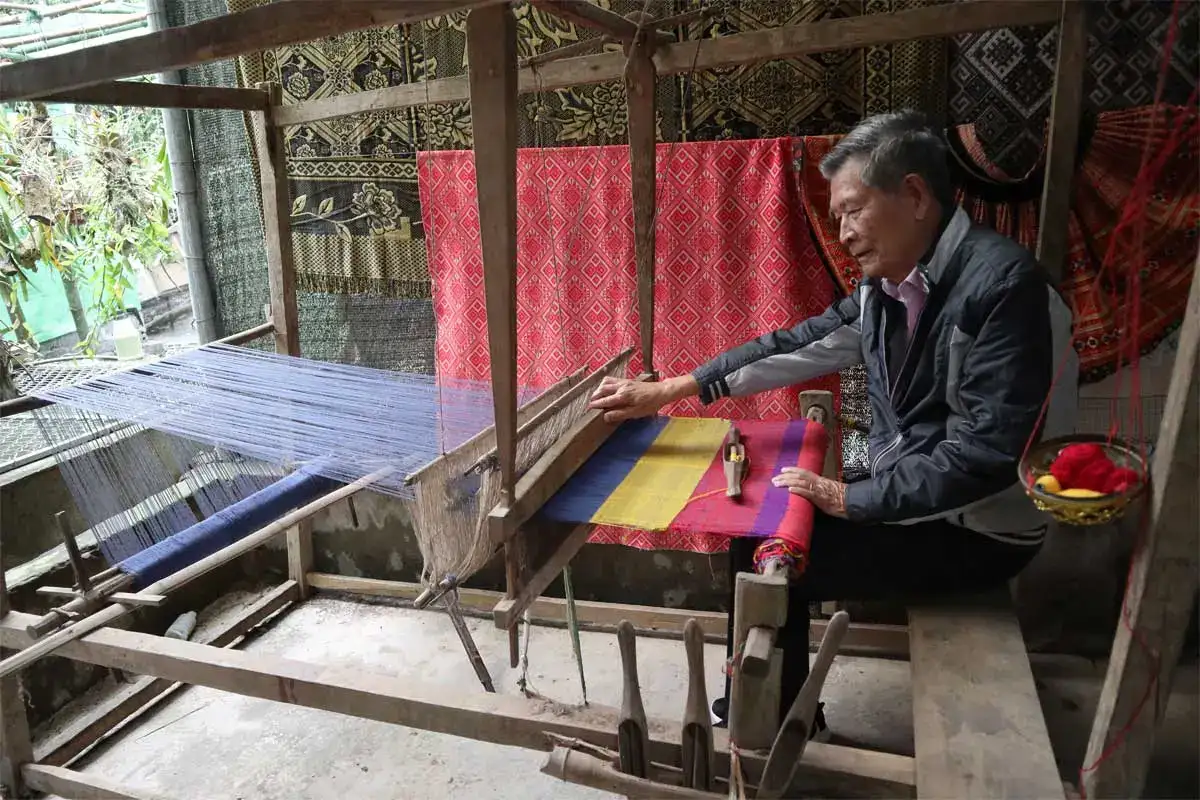
Travel south from the high mountains of Ha Giang and you will reach the peaceful Mai Chau Valley.
Lac Village and Pom Coong Village are two of the best-known Thai communities in the area and are popular stops for travelers exploring traditional culture in Northern Vietnam.
They are also excellent places to discover the colorful textile traditions of the Thai people.
Colorful Thai Textiles
Thai textiles are generally brighter and more colorful than the deep indigo fabrics traditionally associated with the Hmong.
Red, pink, yellow, green, and blue are commonly used to create decorative patterns inspired by nature, animals, flowers, and traditional symbols.
Traditional wooden looms are used to produce scarves, clothing, blankets, bags, and other textiles.
Watching an experienced weaver work a traditional loom is a fascinating way to appreciate how much skill and patience goes into a single piece of fabric.
Experience Traditional Dyeing
Some local workshops and community-based producers also introduce visitors to natural dyeing techniques.
Plants, leaves, roots, and flowers can be used to create different shades of color.
Trying to dye thread yourself can be a fun cultural experience and gives you a better appreciation of the work involved in traditional textile production.
What to Buy in Mai Chau
If you are looking for handmade souvenirs, Mai Chau offers plenty of choices.
Popular items include:
- Thai-style scarves
- Brocade bags
- Handmade wallets
- Decorative textiles
- Traditional clothing
- Handwoven household items
Buying directly from local artisans is also a meaningful way to support traditional crafts and local communities.
3. Cat Cat Village – Sapa, Lao Cai
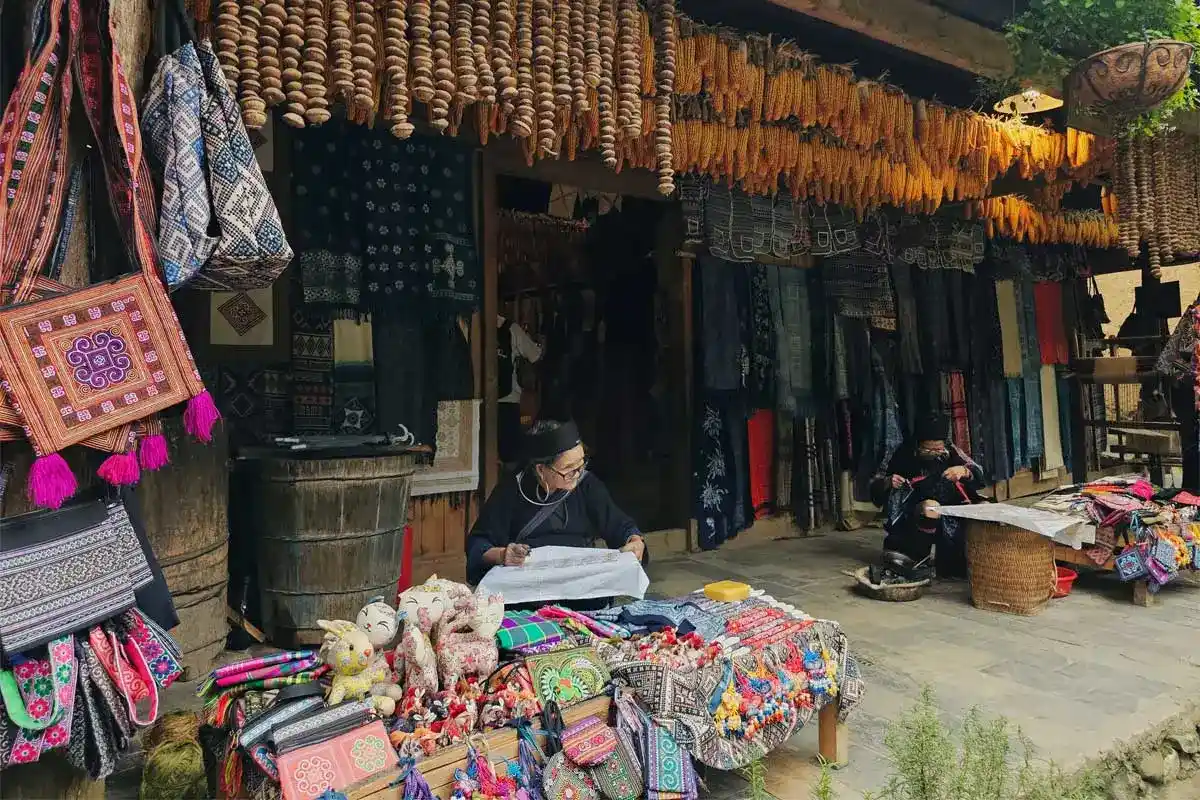
Cat Cat Village is one of the most famous ethnic villages in Sapa and one of the easiest places for travelers to experience traditional Hmong culture.
Located close to Sapa town, the village is home to the Black Hmong community, whose traditional clothing is strongly associated with deep indigo-colored textiles.
The Traditional Art of Indigo Dyeing
Indigo is an essential part of traditional Black Hmong clothing.
The dyeing process involves repeatedly soaking fabric in natural indigo until the desired deep blue or blue-black color is achieved.
The process takes time and requires experience.
The finished fabric is usually thick, durable, and has a distinctive texture that is very different from modern factory-made clothing.
Traditional Hmong Textile Patterns
Traditional Hmong textiles may incorporate several techniques, including weaving, embroidery, appliqué, and beeswax decoration.
Many patterns are inspired by nature, animals, everyday life, and traditional beliefs.
The designs may look simple at first glance, but creating balanced patterns by hand requires considerable skill.
Visiting Cat Cat Village
Cat Cat is a convenient option if you are staying in Sapa and want to combine sightseeing with a cultural experience.
You can explore traditional houses, see local handicrafts, learn about Hmong clothing, and browse handmade textile products.
Because Cat Cat is a popular tourist destination, it is worth taking some time to look for genuinely handmade products rather than mass-produced souvenirs.
4. Ta Phin Village – Sapa, Lao Cai
While Cat Cat is closely associated with the Hmong, Ta Phin is particularly famous for the Red Dao people.
The village is one of the most interesting destinations for travelers who want to discover traditional embroidery and ethnic clothing in Northwest Vietnam.
Red Dao Embroidery
Red Dao traditional clothing is famous for its intricate embroidery and striking use of red.
Women traditionally spend months working on garments, carefully adding colorful patterns to indigo fabric.
A complete traditional outfit can require an enormous amount of time and patience.
The detailed embroidery around collars, sleeves, and other parts of the clothing creates a distinctive visual style.
Patterns with Meaning
Traditional Red Dao patterns are not simply decorative.
Many designs are associated with nature, beauty, family, spirituality, and local beliefs.
Talking to local artisans can reveal fascinating stories about why particular patterns and colors are used.
Combine Textile Culture with a Herbal Bath
Ta Phin is also famous for traditional Red Dao herbal baths.
After walking through the village and visiting local textile workshops, soaking in a wooden tub filled with aromatic herbal water is a relaxing way to end the experience.
It is one of the easiest ways to combine cultural discovery with local wellness traditions.
5. Ban Hon Village – Tam Duong, Lai Chau
For travelers who prefer places away from the main tourist trail, Ban Hon Village in Lai Chau is an excellent choice.
The village is home to the Lu ethnic community, whose traditional clothing and textile traditions are among the most distinctive in Northwest Vietnam.
Traditional Lu Clothing
Traditional Lu clothing combines woven fabric, embroidery, decorative patterns, and accessories.
Some garments are decorated with small metal ornaments that move and create a distinctive sound as the wearer walks.
The production process requires careful attention to detail, particularly when colorful patterns are incorporated directly into the woven fabric.
Symmetrical Geometric Designs
Lu textiles are often characterized by geometric patterns and strong symmetry.
Blue, white, and deep red are commonly combined to create striking designs.
The contrast between simple indigo fabric and colorful decorative borders gives traditional Lu clothing an elegant and distinctive appearance.
Discover a Less-Visited Side of Northwest Vietnam
Ban Hon is a good choice for travelers who want to experience ethnic culture away from the busiest tourist destinations.
A visit here can provide a more intimate look at traditional clothing, weaving, and everyday village life.
6. Bac Ha – The Colorful Textile Culture of the Flower Hmong
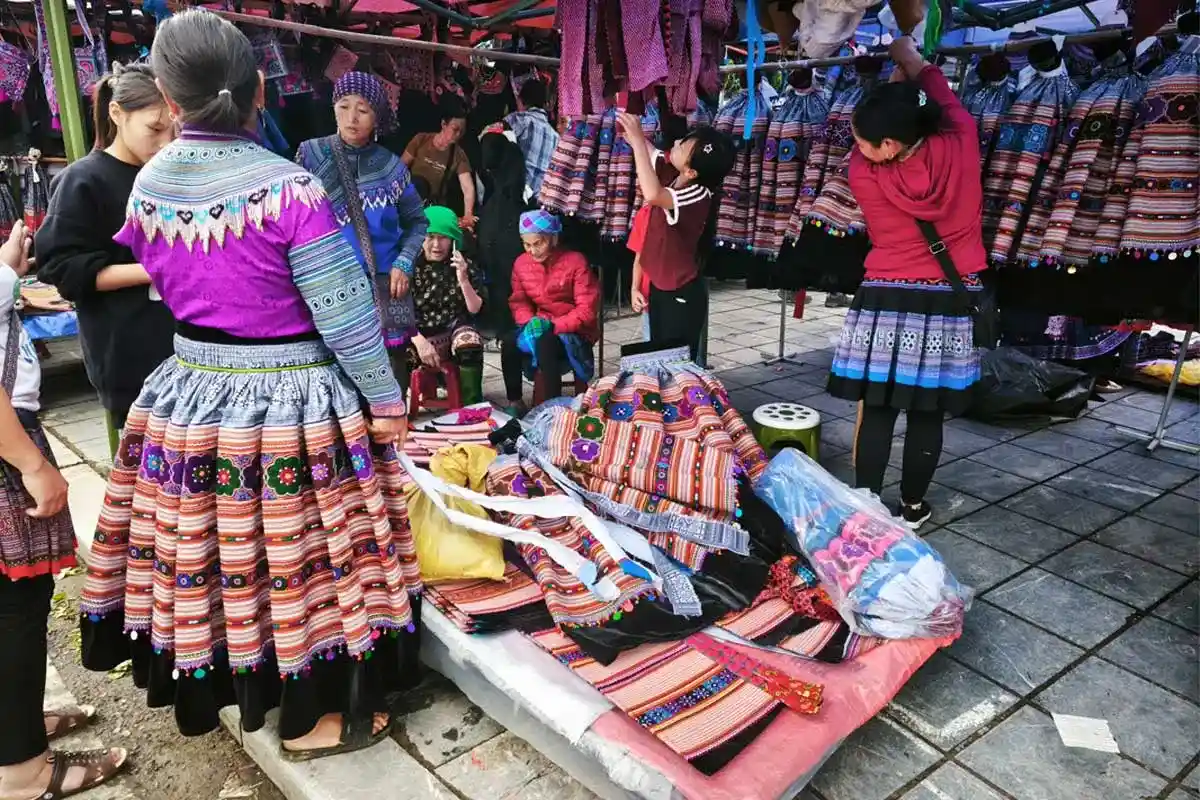
Bac Ha in Lao Cai is famous for its highland landscapes, Sunday market, and diverse ethnic communities.
It is also one of the best places to see the spectacular traditional clothing of the Flower Hmong.
A Celebration of Color
Flower Hmong textiles are among the most colorful ethnic textiles in Vietnam.
Traditional clothing can feature vivid combinations of pink, orange, red, blue, green, and other bright colors.
Intricate embroidery and decorative patterns may cover large sections of a skirt, jacket, or other traditional garment.
From a distance, the colorful designs can look like flowers blooming across the fabric.
Appliqué and Embroidery
Flower Hmong artisans use a variety of techniques to decorate their clothing.
One of them is appliqué, in which small pieces of colored fabric are carefully cut and sewn onto another piece of fabric.
Combined with embroidery, this creates patterns with impressive texture and depth.
Bac Ha Sunday Market
Bac Ha Sunday Market is one of the best places to see traditional ethnic clothing in everyday use.
People from surrounding villages come to the market wearing their traditional outfits, creating one of the most colorful cultural scenes in northern Vietnam.
The market is also a good place to find handmade textiles and traditional souvenirs.
If you are interested in Northwest Vietnam brocade weaving villages, Bac Ha should definitely be on your list.
7. Muong Luan Traditional Weaving Village – Dien Bien
Our final stop takes us further west to Dien Bien, a province famous for its historical significance and diverse ethnic cultures.
In Muong Luan, the local Lao community continues to preserve traditional weaving techniques that have been passed down through generations.
Traditional Pattern Weaving
One of the most interesting features of Lao weaving is the ability to create decorative patterns directly during the weaving process.
Instead of embroidering the designs onto finished fabric, artisans carefully arrange the warp and weft threads so that the patterns appear as the fabric is woven.
Traditional motifs may include animals, geometric designs, spiritual symbols, and patterns associated with local beliefs.
Cotton and Silk Textiles
The Lao community traditionally works with materials such as cotton and silk.
Compared with the heavier linen traditionally used by some Hmong communities, these materials can create softer and more flowing fabrics.
They may be used to make scarves, ceremonial clothing, household textiles, and decorative pieces.
Experience Community-Based Tourism
Muong Luan is also developing as a community tourism destination.
Depending on local arrangements, visitors may be able to stay in traditional stilt houses, meet local artisans, learn about spinning and weaving, and try a traditional loom.
The sound of the wooden loom combined with the surrounding mountain landscape makes the experience especially memorable.
Why Visit Northwest Vietnam Brocade Weaving Villages?
The Northwest Vietnam brocade weaving villages are not simply places to buy colorful souvenirs.
They are living cultural spaces where traditional knowledge, craftsmanship, and ethnic identity continue to be preserved.
A visit to these communities allows you to:
- Meet local textile artisans
- Watch traditional weaving techniques
- Learn about natural indigo dyeing
- Discover traditional embroidery
- Understand the meaning behind ethnic patterns
- See traditional clothing being made
- Buy handmade souvenirs directly from local communities
- Support the preservation of traditional crafts
For travelers interested in authentic cultural experiences, these villages offer a completely different perspective on Northern Vietnam.
Tips for Buying Authentic Brocade in Northwest Vietnam
1. Buy Directly from Local Artisans
Whenever possible, buy from local artisans, cooperatives, or community-based workshops.
This gives you a better chance of finding genuinely handmade products while directly supporting local communities.
2. Look at the Back of the Fabric
If you are buying embroidered textiles, turn the fabric over.
Hand embroidery often has small variations in stitch length, thread tension, and knots.
These imperfections can actually be evidence of handmade craftsmanship.
3. Ask About the Materials
Do not hesitate to ask whether a product is made from linen, cotton, silk, or synthetic fibers.
You can also ask whether natural dyes such as indigo were used.
4. Be Careful with Indigo-Dyed Textiles
Natural indigo can bleed or fade during the first few washes.
Wash these textiles gently in cold water, avoid strong detergents, and keep them away from direct sunlight when drying.
Frequently Asked Questions About Northwest Vietnam Brocade Weaving Villages
What are the best brocade weaving villages in Northwest Vietnam?
Some of the most interesting destinations include Lung Tam in Ha Giang, Lac Village and Pom Coong in Mai Chau, Cat Cat and Ta Phin near Sapa, Ban Hon in Lai Chau, Bac Ha in Lao Cai, and Muong Luan in Dien Bien.
What ethnic groups make traditional textiles in Northwest Vietnam?
Several ethnic communities are known for their traditional textile craftsmanship, including the Hmong, Dao, Thai, Lu, and Lao communities.
Each group has its own combination of weaving, embroidery, dyeing, patterns, colors, and traditional clothing.
Where can I buy authentic brocade in Northwest Vietnam?
The best places are traditional villages, local cooperatives, artisan workshops, and ethnic markets.
Buying directly from the makers is usually a better option than purchasing mass-produced souvenirs.
Is all brocade handmade?
Not necessarily.
Some products sold in tourist areas may be machine-made or commercially produced. If authentic craftsmanship is important to you, ask about the materials, production process, and whether the item was made by hand.
How much does traditional brocade cost?
Prices vary considerably depending on the material, size, design, and amount of handwork.
Small handmade accessories may be relatively inexpensive, while highly detailed traditional garments can cost several million Vietnamese dong.
A higher price may reflect many hours—or even months—of work by an artisan.
Does natural indigo fade?
Natural indigo can fade or release some excess dye, particularly during the first few washes.
This is normal for naturally dyed textiles. Gentle washing and drying in the shade can help preserve the color.
Final Thoughts
Exploring the Northwest Vietnam brocade weaving villages is a wonderful way to go beyond the region’s famous landscapes and discover the people and traditions behind them.
From the hand-processed linen of Lung Tam to the colorful textiles of Mai Chau and Bac Ha, the deep indigo fabrics of the Hmong and Dao, and the traditional weaving of the Lu and Lao communities, every region has its own distinctive style.
These textiles are more than beautiful souvenirs. They represent history, identity, craftsmanship, and stories passed from one generation to another.
So, on your next journey through Northwest Vietnam, take some time to visit a traditional weaving village.
Meet the artisans, watch the looms at work, learn the stories behind the patterns, and perhaps bring home a small handmade piece of Northern Vietnam.
The best souvenirs are not simply things you buy—they are stories you take home with you.
Explore More Traditional Handicraft Villages in Northern Vietnam
If you are interested in traditional crafts beyond textiles and brocade, explore more handicraft villages in Northern Vietnam to discover pottery, lacquer, bamboo crafts, embroidery, traditional paper, and other centuries-old Vietnamese crafts.
Discover Northern Vietnam with Old Quarter Travel and experience the region beyond its landscapes, one traditional village at a time.